

DMC Cable TV : ค้นหาหนังสือธรรมะ หน้า 432 / 615
หน้าหนังสือทั้งหมด
118
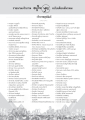
รายนามเจ้าภาพ ฉบับเดือนมีนาคม
รายนามเจ้าภาพ ฉบับเดือนมีนาคม
เจ้าภาพอุปถัมภ์
◆ พระสมุทร จารุสุกโธ
◆ พระสุรียา ดีภักดิ์โจ
และทีมอภิวัฒน์ศรัษฎาเศรษฐกิจ
◆ พระสุรียา พลสงชล
และครอบครัวหวลกลาง
◆ พระอนุชิต ญาณนโย และผบ.กองอาคาร สถานที่ ว
รายชื่อเจ้าภาพในเดือนมีนาคมประกอบด้วยบุคคลสำคัญต่างๆ รวมถึงพระราชาและพระอาจารย์จากวัดพระธรรมกาย ซึ่งมีการสื่อสารระหว่างสมาชิกและชุมชนในการร่วมมือสร้างเศรษฐกิจและสังคมที่เข้มแข็ง ผ่านกิจกรรมที่จัดขึ้นโ
120
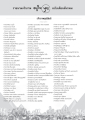
รายนามเจ้าภาพ อุปถัมภ์
รายนามเจ้าภาพ จับงาอุปถัมภ์
กัลยาณ์ขันธ์บัวโค้ง
กล้าหัสดีธร ชุณหวัณกุล พร้อมเพรียงกัน
กล้ารามญาติ ขวัญใจ และครอบครัว
กล้ารุ่งโรจน์ ลิขิตโชติ
กล้าสิทธิอาวุธ วิชิตชัย คำชะ
กล้าฤทธิ์-สุมนามาส-วุฒิชา
เอกสารนี้รวบรวมรายชื่อของเจ้าภาพที่ได้ให้การสนับสนุน โดยมีรายละเอียดเกี่ยวกับชื่อผู้สนับสนุนและครอบครัวของพวกเขา เริ่มจากกล้าหัสดีธร ชุณหวัณกุล ไปจนถึงกัลยาณ์ สุขศิลา ซึ่งทั้งหมดนี้แสดงถึงความมีน้ำใจข
121
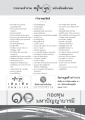
รายนามเจ้าภาพเดือนมีนาคม
รายนามเจ้าภาพ ฉบับเดือนมีนาคม
เจ้าภาพอุปถัมภ์
• กัลยาณจิต-ลำดวน อ้อมนต์
• ด.ช.กล้าหาญ บุญจิต
• กัลยาณี สุขโร่-คุณพ่อ-คุณแม่ และพี่ๆทุกคน
• กัลยาณี ศรีโล่
• ถวัลย์ใจ-ขวัญเรือน-ชิต เจนแสนแสง
• กัลยา
เอกสารนี้ประกอบด้วยรายชื่อของเจ้าภาพอุปถัมภ์และครอบครัวอุปถัมภ์ที่มีส่วนช่วยสนับสนุนกิจกรรมต่าง ๆ ในเดือนมีนาคม โดยมีการระบุชื่อของแต่ละกลุ่มและบุคคลที่มีส่วนร่วมในการเป็นเจ้าภาพ และให้ข้อมูลเกี่ยวกับ
124
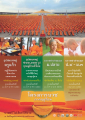
อุปสมบทหมู่และโครงการบวชฤดูร้อน
อุปสมบทหมู่
ครูแก้ว
ครูผู้ให้แสงสว่างทั่วโลกและทางธรรม
*สำหรับครู, อาจารย์
อบรมตั้งแต่วันที่ ๑๑ ม.ค. – ๒ พ.ค. ๒๕๖๖
อุปสมบทหมู่ ๑๐๐,๐๐๐ รูปทุกหมู่บ้านทั่วไทย
นวชฏตท่านคุณ
หน้าที่ที่ยิ่งใหญ่ของลูกผู้ชา
โครงการอุปสมบทหมู่จัดขึ้นในปี ๒๕๖๖ เพื่อเป็นการอบรมและเปิดประสบการณ์ใหม่ในการศึกษาธรรมสำหรับครู อาจารย์ และประชาชนทั่วไป โดยเริ่มตั้งแต่วันที่ ๑๑ ม.ค. ถึง ๒ พ.ค. ๒๕๖๖ โดยมุ่งหวังให้มีผู้เข้าร่วมอุปสมบ
2
Dhammachai International Research Institute (DIRI) Overview
The Dhammachai International Research Institute (DIRI) is a research institute that traces the roots of the Buddha’s teachings back to original manuscripts with the aim of finding true and clear evide
The Dhammachai International Research Institute (DIRI) is dedicated to tracing the origins of the Buddha's teachings, aiming to discover clear evidence of early Dhamma practices. Established by the 60
7
Exploring Buddhist Meditation and Its Significance
Preface
Not a month goes by these days without another important article being published on some newly uncovered Buddhist text, and among the discoveries are ancient materials about Buddhist meditati
This preface discusses the ongoing discoveries in Buddhist meditation texts and the efforts of Venerable Phrakrupaladnayokwarawat (Sudhammo Bhikkhu) in promoting scholarly exploration. It emphasizes t
21
Exploring Buddhist Manuscripts and Teachings
JDIRI
Contents
The Most Venerable Phrathepyanmahami (Luang Phaw Dhammajayo)
*Homily* I
Garry W. Trompf
Emeritus Professor in the History of Ideas
This text presents a collection of scholarly articles on Buddhist manuscripts and teachings, focusing on contributions from various experts. It includes studies on the Tipitaka Manuscripts of the Kham
23
The Tipitaka Manuscripts of the Khammouan Cave in Laos
The Tipitaka Manuscripts of the Khammouan Cave in Laos
Anatole-Roger Peltier
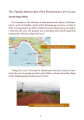
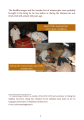
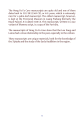
On invitation of the Ministry of Information and Culture (Vientiane, Laos), I went to Thakhek, capital of the Khammouan p
In May 2005, Anatole-Roger Peltier was invited by the Ministry of Information and Culture in Laos to explore the Nong Pa Fa Cave in Khammouan Province. Accompanied by a cultural officer and a local sc
25
Historical Artifacts from Nong Pa Fa Cave
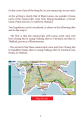
The Buddha images and the wooden box of manuscripts were probably brought to the Nong Pa Fa Cave before or during the Siamese-Lao war (1826-1828 AD), almost 200 years ago.
Most of the manuscripts are
The Buddha images and wooden box of manuscripts discovered in Nong Pa Fa Cave were likely brought there before or during the Siamese-Lao war between 1826 and 1828. Most manuscripts are in poor conditi
29
Exploring the Origins of the Nong Pa Fa Cave Manuscripts
On the cover of one of the Nong Pa Fa Cave manuscript, we can read:
As the writing is clearly that of Dham Lanna, one wonders if some parts of the manuscripts come from Muang Nandaburi, a former name
This text examines the Nong Pa Fa Cave manuscripts, highlighting their writing style as Dham Lanna. It raises questions about their origins, specifically whether part of these manuscripts originate fr
30
Nong Pa Fa Cave Manuscripts: A Historical Insight
The Nong Pa Fa Cave manuscripts are quite old and one of them dates back to 2112 BE (1569 CE), or 441 years, which is extremely rare for a palm-leaf manuscript. The oldest manuscript, however, is kept
The Nong Pa Fa Cave manuscripts are ancient, with one dating back to 2112 BE (1569 CE). The oldest, from 1520 CE, resides in Luang Prabang. These writings in a Lao variant of Dhamma script include a c
32
Dhamma-kāya in the Pali Canon
Dhamma-kāya in the Pali Canon¹
Chanida Jantrasrisalai
I. Why ‘Dhamma-kāya’ in the ‘Pali Canon’?
The term dhamma-kāya/dharmakāya appears in Buddhist literature of different schools. Previous scholars
The study investigates the term dhamma-kāya as presented in the Pali Canon, aiming to provide a comprehensive analysis that has been overlooked in previous studies. While many references have been mad
33
Reinterpreting Dhammarāya in the Pali Canon
Most of them refer only to the Aggañña-sutta passage, 4 missing out the three Apadāna references. 5 The reason could be either that the scholars concerned have taken the aforementioned text as represe
This paper examines the overlooked references to dhammarāya in the Pali canon, emphasizing a context not previously presented. It critiques the tendency to categorize texts strictly as ‘early Buddhism
34
Understanding Dhammakāya in Early Buddhist Thought
II. The Different Approach
A fairly established academic understanding has settled regarding the term dhammakāya in the Pali canon, that it was used merely in the sense of the ‘Buddha’s teachings.’ In
The term 'dhammakāya' in the Pali canon is understood as representing the Buddha's teachings. It is established through several canonical passages that equate the Buddha with dhamma. Notable reference
35
Exploring the Concept of Dhammakāya in Pali Canonical Texts
Of the three canonical passages mentioned above, only the first, namely the Aggañña-sutta passage, contains the term dhammakāya, while the other two do not. The reason for which all these passages are
This study reexamines the term dhammakāya in specific Pali canonical passages, notably the Aggañña-sutta, contrasting it with previous scholarly interpretations that often exclusively link the term to
36
References to 'Dhammakāya' in the Pāli Canon
III. References to 'Dhammakāya' in the Pāli Canon
In the Pali canon, the term dhammakāya appears four times: once in the Aggiāṇā-sutta of the Dīgha-nikāya and three more times in Apadāna literature.
In the Pāli Canon, the term 'dhammakāya' is found four times, significantly in the Aggiāṇā-sutta and Apadāna literature. It serves various roles including a designation for the Tathāgata and associati
38
Understanding the Concept of Dhammakāya in Buddhist Thought
D.III.84
Vāsettha and Bhāradvāja, he whose confidence in the
Tathāgata is settled, rooted, established, solid, irremovable by
any ascetic or brahmin, any deva or Māra or Brahmā or anyone
in the world
In this passage, Vāsettha and Bhāradvāja discuss the unwavering confidence in the Tathāgata, stating that those deeply rooted in dhamma can claim to be heirs of dhamma. The term 'dhammakāya' and its i
39
Interpretations of Dhammakāya in Early Pāli Texts
Gombrich, while differently translating the term in this passage as a bahubbiha compound 'dhamma-bodied,' similarly interprets it as an indication that the Buddha's true import is due to 'his teaching
This text delves into various scholars' interpretations of the term 'dhammakāya' within the context of early Pāli suttas. Gombrich views it as 'dhamma-bodied,' emphasizing that the essence of the Budd
41
Understanding Dhammakāya: A Scholarly Interpretation
Points to Consider
It may be observed that the difference in previous scholarly interpretations of the term dhammakāya in this passage mainly pertains to the inter-relatedness of two distinctive meani
This text delves into scholarly interpretations of the term 'dhammakāya', emphasizing the need for a nuanced understanding of 'dhamma' as both a realized reality and a verbal expression. It identifies
42
Saddhā: The Criterion of Being the Tathāgata's Son
Saddhā: Criterion of being the Tathāgata's Son
The first point to be looked at is the criterion of being the Buddha’s ‘true son’ which is, in this passage, defined by means of his
irremovable confiden
This text discusses the criterion of being the Tathāgata's son, emphasizing the irremovable confidence (saddhā) in the Buddha. It defines this confidence as settled and unchangeable despite external i